This past Wednesday, we took an unofficial class trip to the Panthéon, where France’s distinguished military commanders, artists and scientists are buried. I don’t particularly like human remains, so I was mostly there because my friends wanted to go. But once I was inside, I was captivated by a series of paintings of Joan of Arc by Jules Eugene Lenepveu.
They are located on the main floor which has depictions of French history. It’s grand with tall ornate ceilings and detailed carvings. But unlike other ornate places we have visited including Versailles and the Sainte Chappelle Church, the Panthéon felt oddly comfortable. This contributed to me feeling contented to spend a good deal of time staring at these paintings.
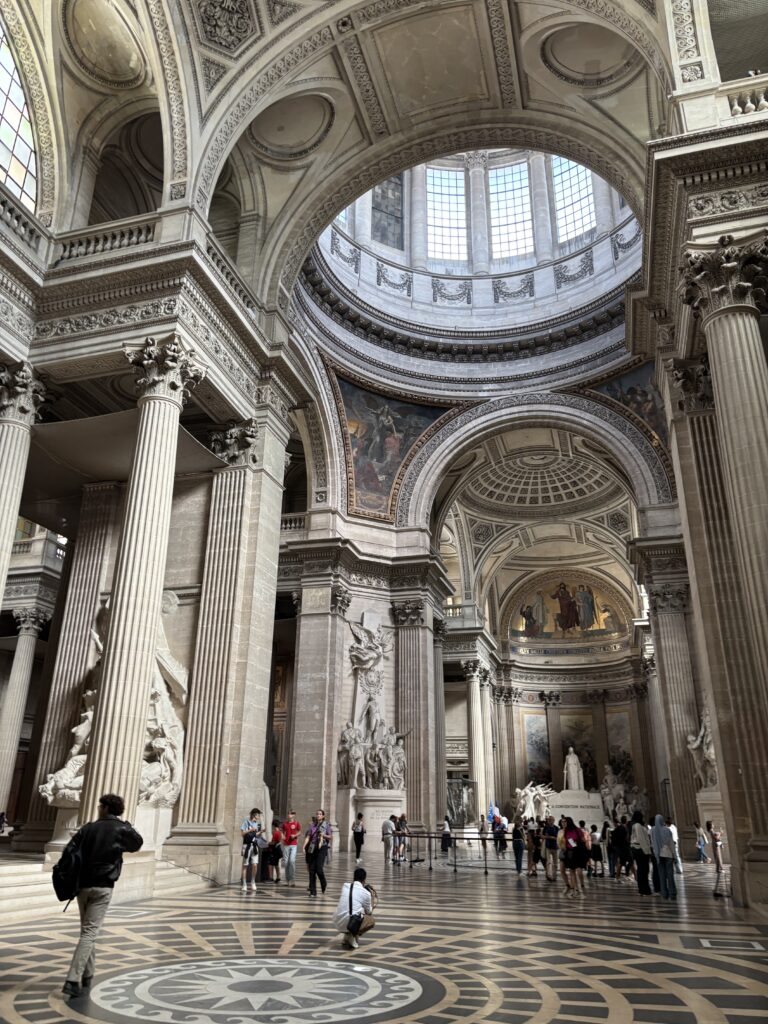
Inside of the Panthéon.
I enjoyed how detailed the paintings are, especially in how symbolic elements progress throughout them. While looking, I actually started taking notes on these symbolic elements and so I thought that I would share some of that analysis here.
The first painting depicts Joan being visited by an Angel. She has dropped her spindle (a drop spindle ironically enough) and her empty hand is ready to receive the sword she is being handed. She looks ahead while the sheep and other people around her look down or away, unaware of what is occurring. Notice the castle far in the background on the left side and the dark clouds.
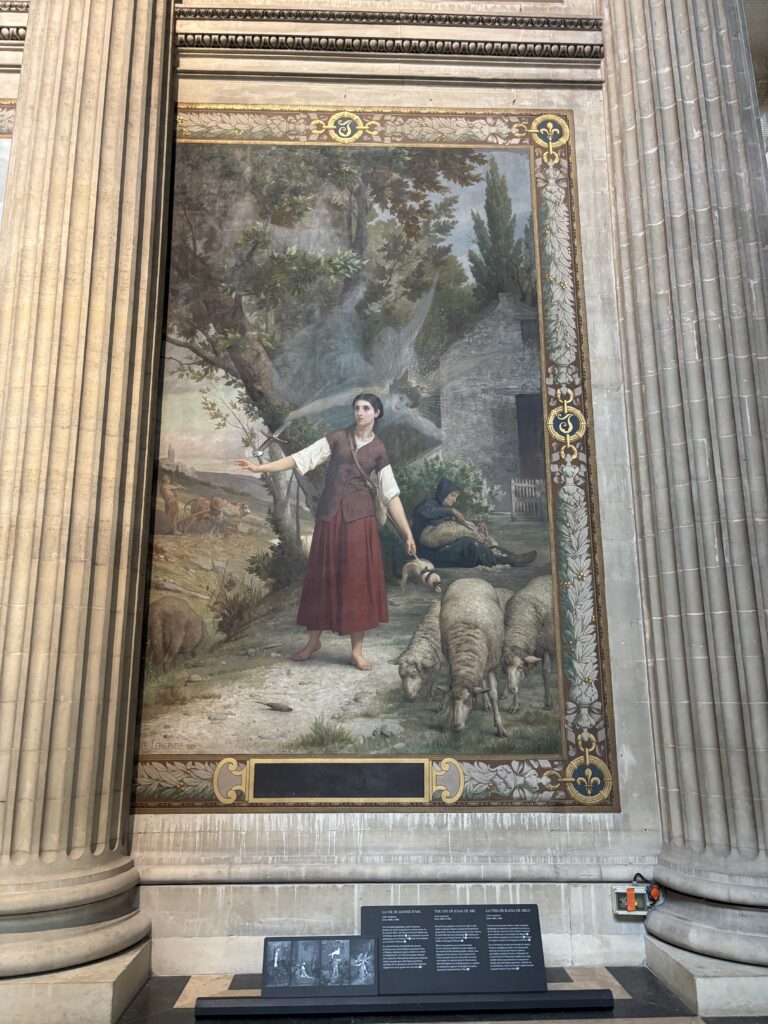
Joan of Arc as Shepherdess by Jules Eugene Lenepveu
In the second painting, Joan is now directly outside the castle leading the armies of Charles VII, who Joan was under divine guidance to help defeat the English. Similarly to the previous painting, she is looking in a different direction than the others. The clouds have opened up some and blue sky is visible. She waves a banner along with her sword demonstrating her role as a symbol. She also looks a bit scared and overwhelmed, but not in a way that makes her any less strong.
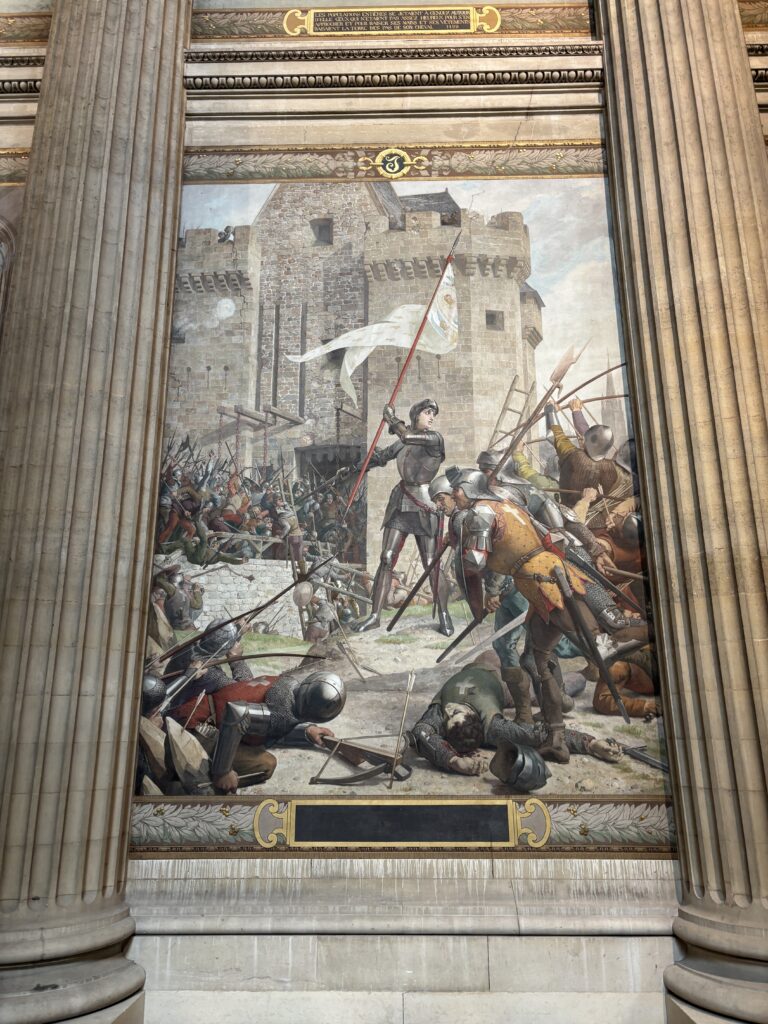
Joan of Arc in Armour before Orleans
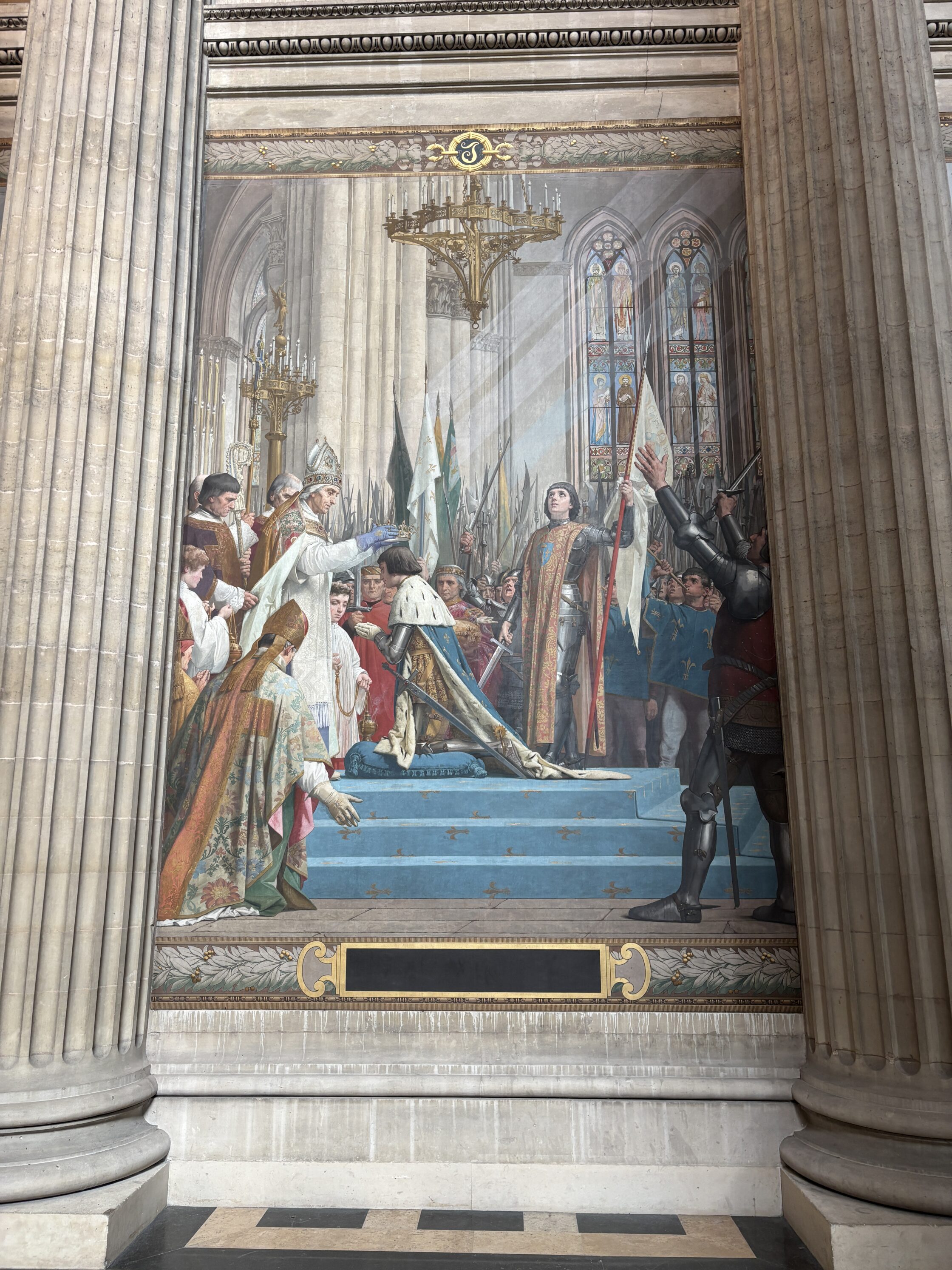
The third painting is my favorite. Joan stands staring up at God still holding the banner from the previous painting while everyone else is focused on the coronation of Charles VII. She is now inside and the sun shines through in her triumph, continuing the themes from the previous paintings. There is something captivating about how she is not the center of attention of the coronation, but is most definitely the center of the painting. I’m not able to focus on the other details for long before I’m pulled back to her.
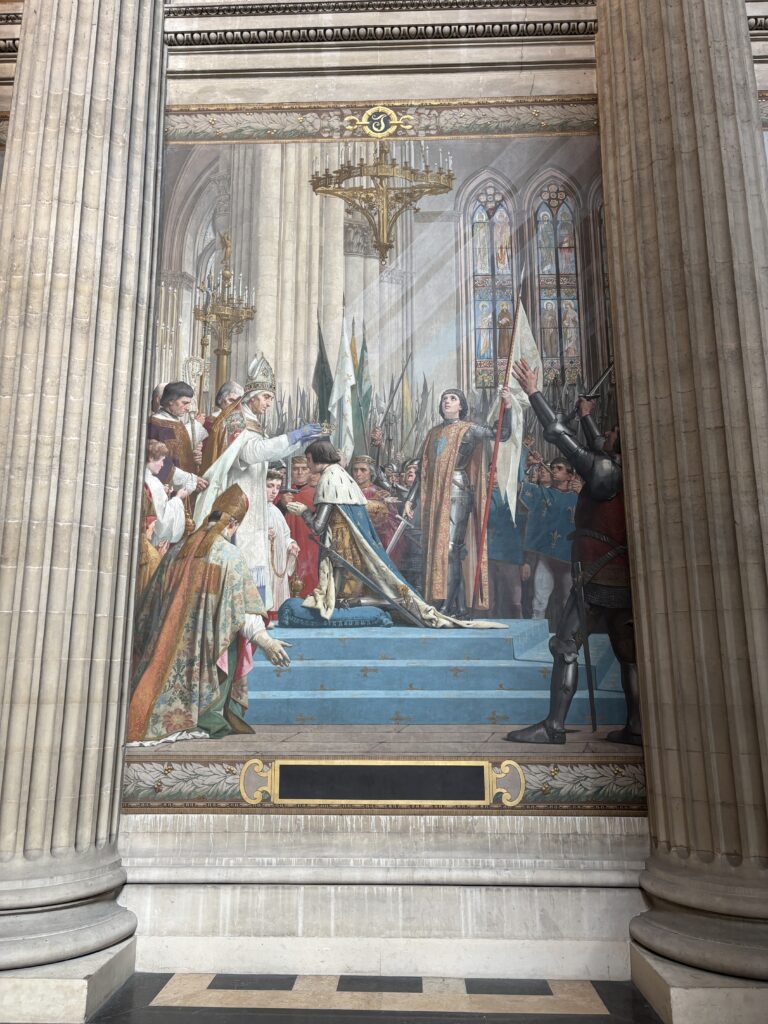
Joan of Arc at Reims for the Coronation of King Charles VII
The final painting depicts Joan of Arc being burned at the stake by the English. She is back outside and spire can still be seen in the distance and the darker clouds have returned. Unlike the other paintings, what is occurring around her is emphasized more. My eyes are led from the figure in red picking up the torch, up to the soldier with a bundle of wood and over to the priest holding one end of the cross until finally they rest of her, clutching that other end of the cross and staring up at God. Once again, she is the only one truly looking up which in this case implies that she is the only one actually acting holy.
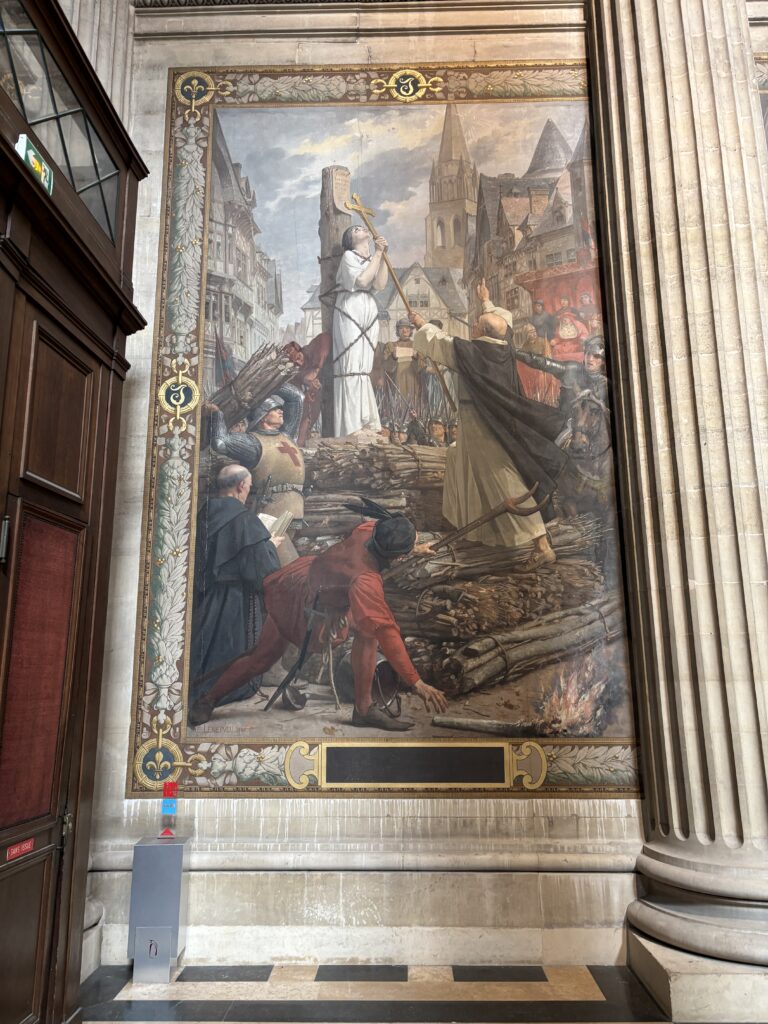
Joan of Arc at the Stake in Rouen
I really love these paintings and they have made me become more curious to learning more about Joan of Arc.
Laurie