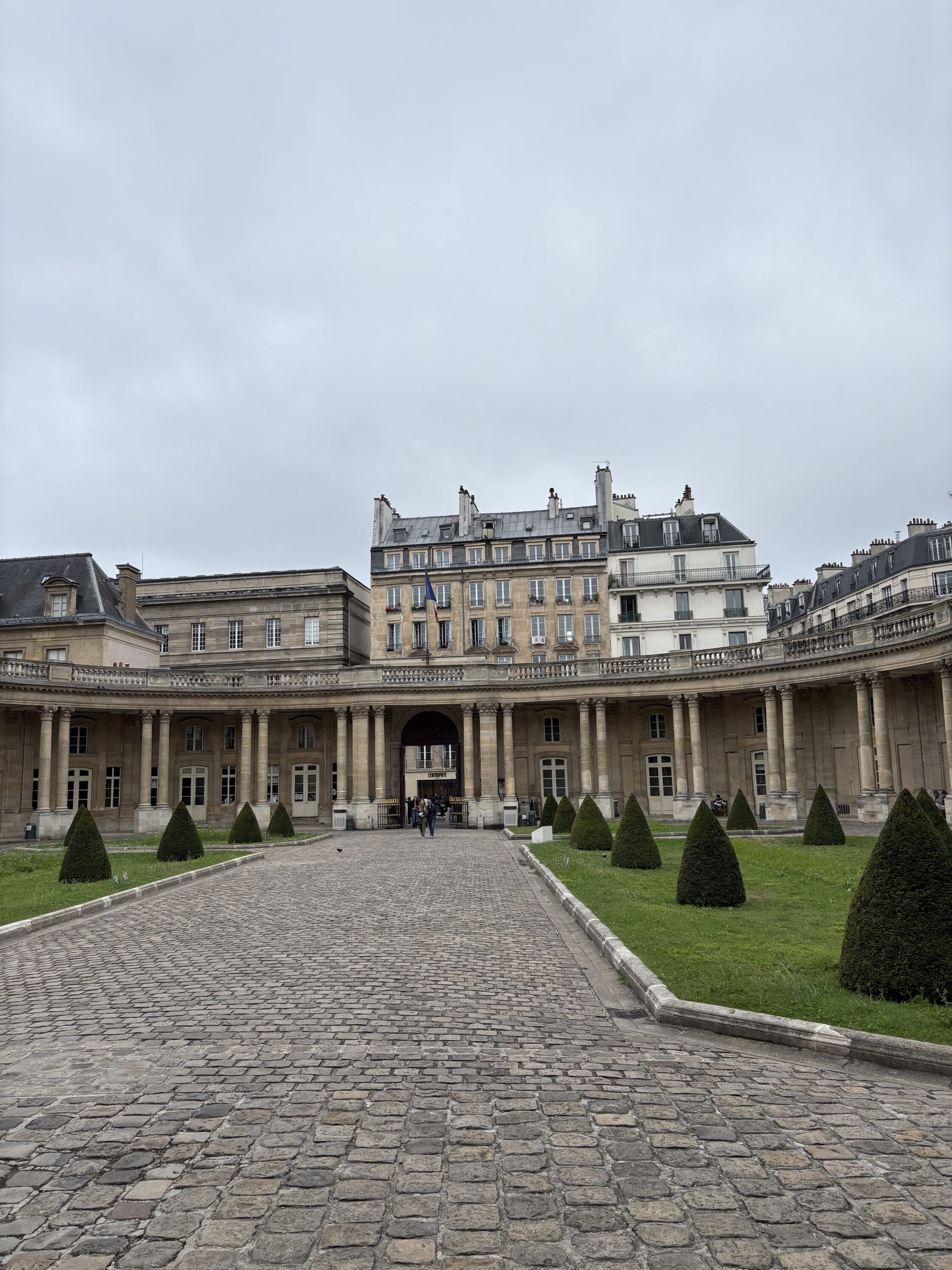
This weekend I visited both Versailles and the Musée des Archives Nationales (the museum of France’s National Archives). Versailles was part of a trip organized by the study abroad organization while I visited the National Archives on my own with my friends.
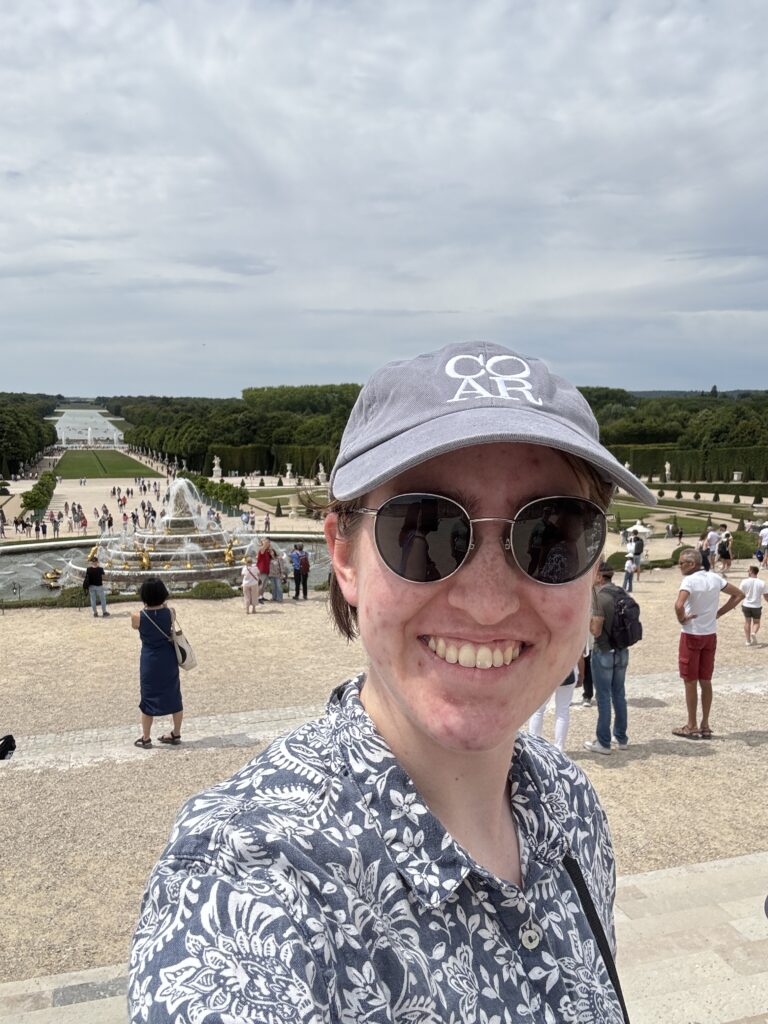
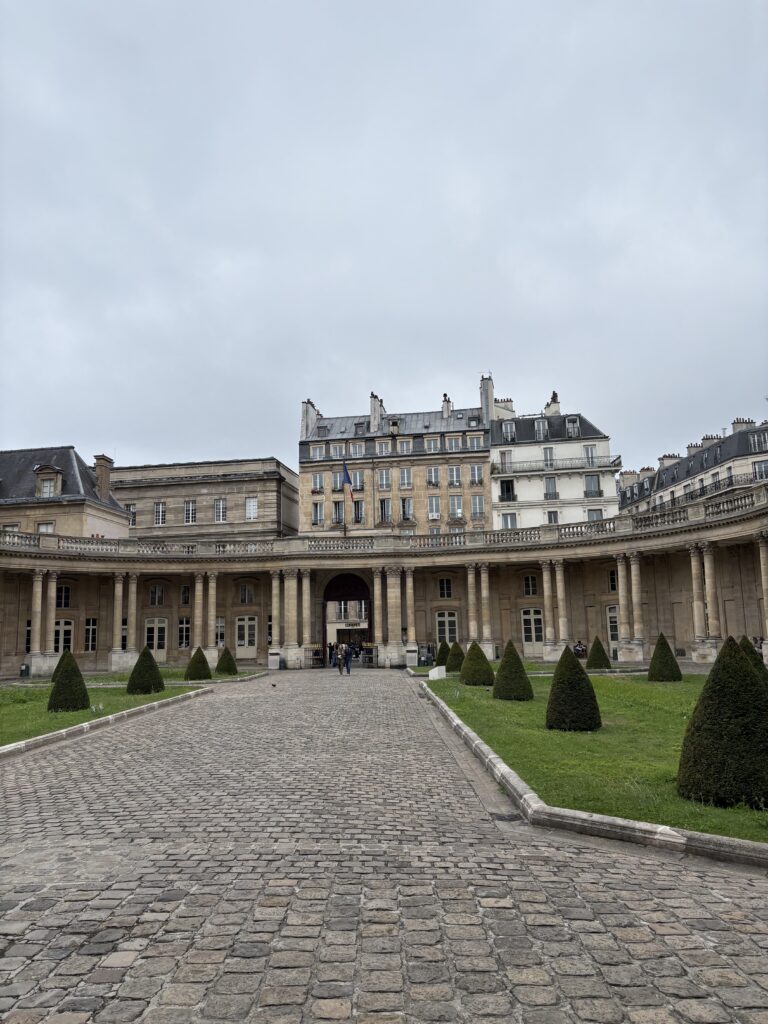
Left: Versailles gardens, Right: Courtyard of the Musée des Archives Nationales
The gardens of Versailles were magnificent, but honestly the house was a bit underwhelming. It is of course outrageously ornate, but I found it difficult to be engaged. Part of this was due to how crowded the site was, but also there was very limited signage. Especially at the beginning of the walk through, the rooms were filled with paintings of Versailles or of people connected to it. There was information on these paintings, but nothing I could find on what the room was used for. Were these galleries when Versailles was a palace? Did they have another function? I had no idea.
In other rooms, the signs were small and limited to one portion of the room, so I would have to push my way to the front to read anything. Often, I didn’t bother and was left with questions.
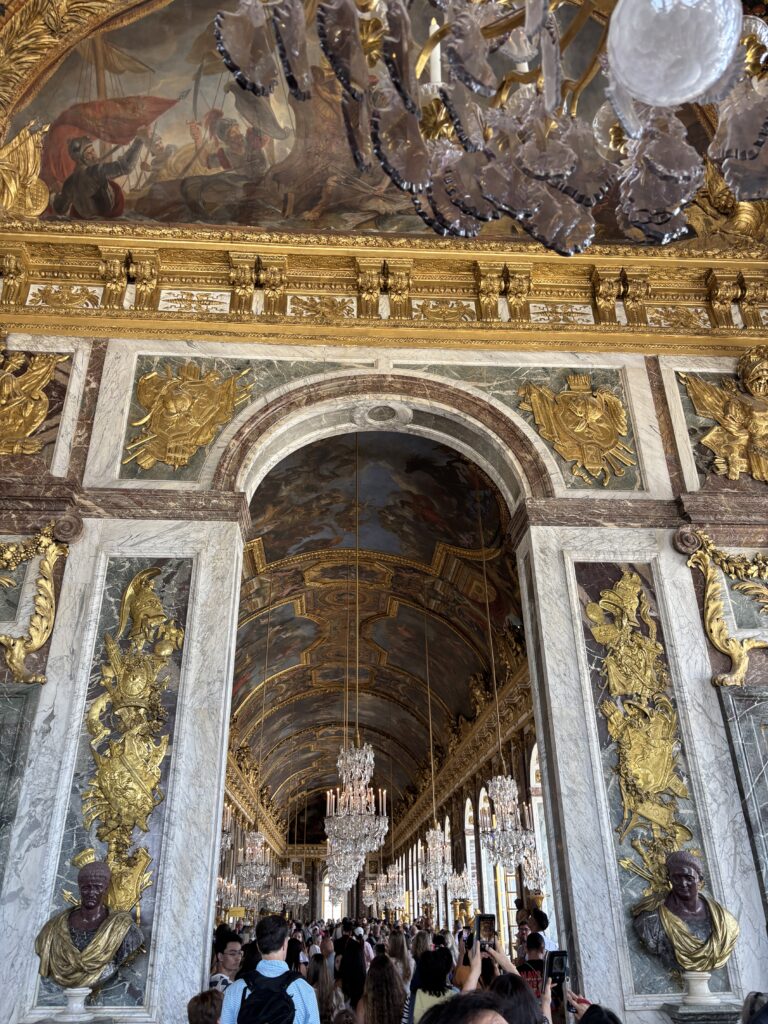
Entryway to the Hall of Mirrors showing the crowds at Versailles
But yesterday at the Musée des Archives Nationales I found a solution to this problem that Versailles can learn from. The Musée des Archives Nationales has both exbibits on items in their collection and on the building when it was resided in by the Soubise family in the late 18th century.
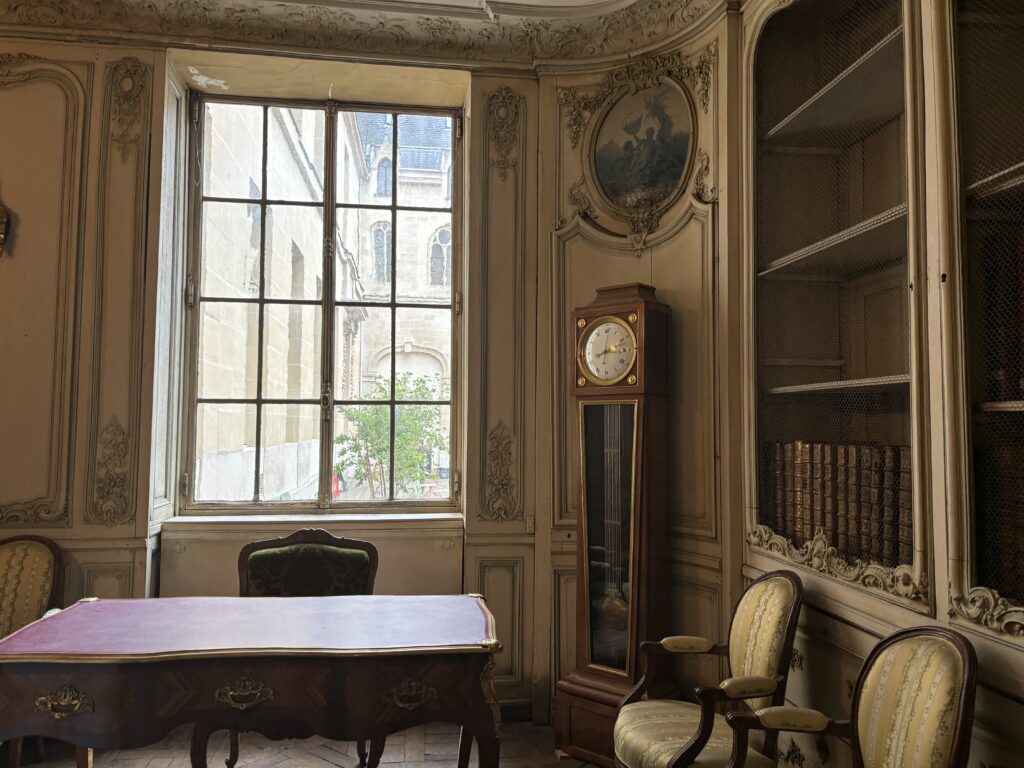
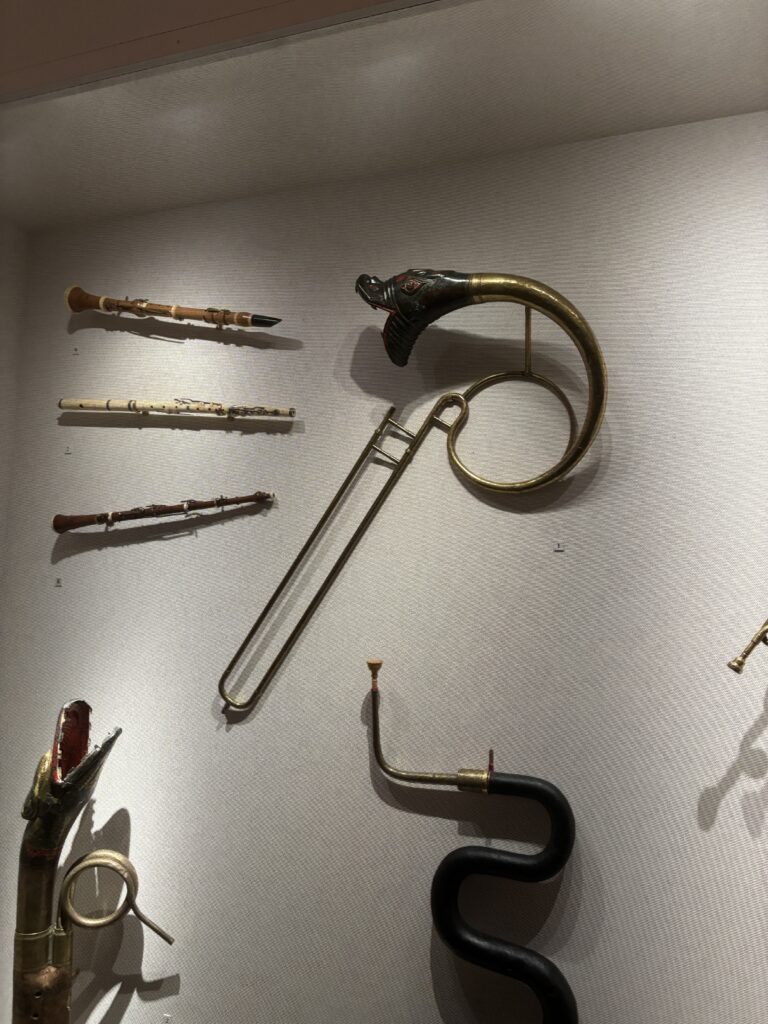
Left: Soubise family study (my favorite room) Right: Historic instruments as part of an exhibit on music’s role in revolutions
In the rooms showing the Soubise family quarters, there were laminated large sheets in a box in both English and French with information on the room. The sheets would have an overview of the room in the Soubise’s time and information about what happened to the room when it was turned into the archives. Additionally, they had small maps referring to various elements in the room that you could use a legend to learn more about. These elements could be the furniture, paintings or decorative elements with specific symbolism. Some rooms with lots of details had a whole other iconography sheet for various details of the room.
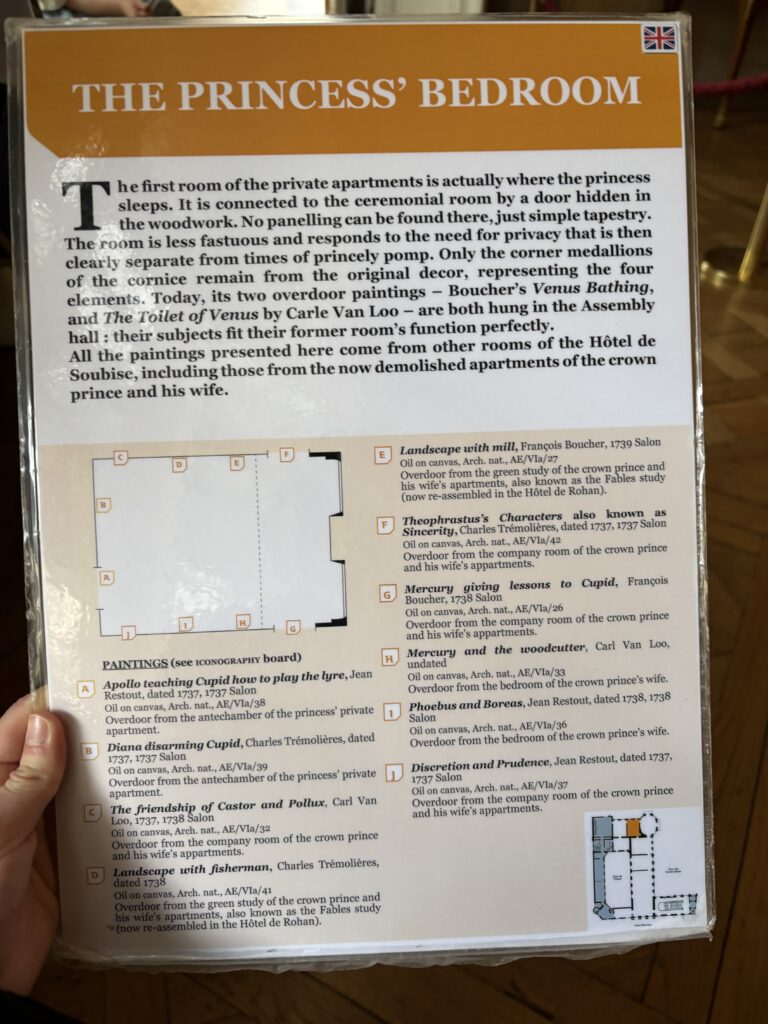
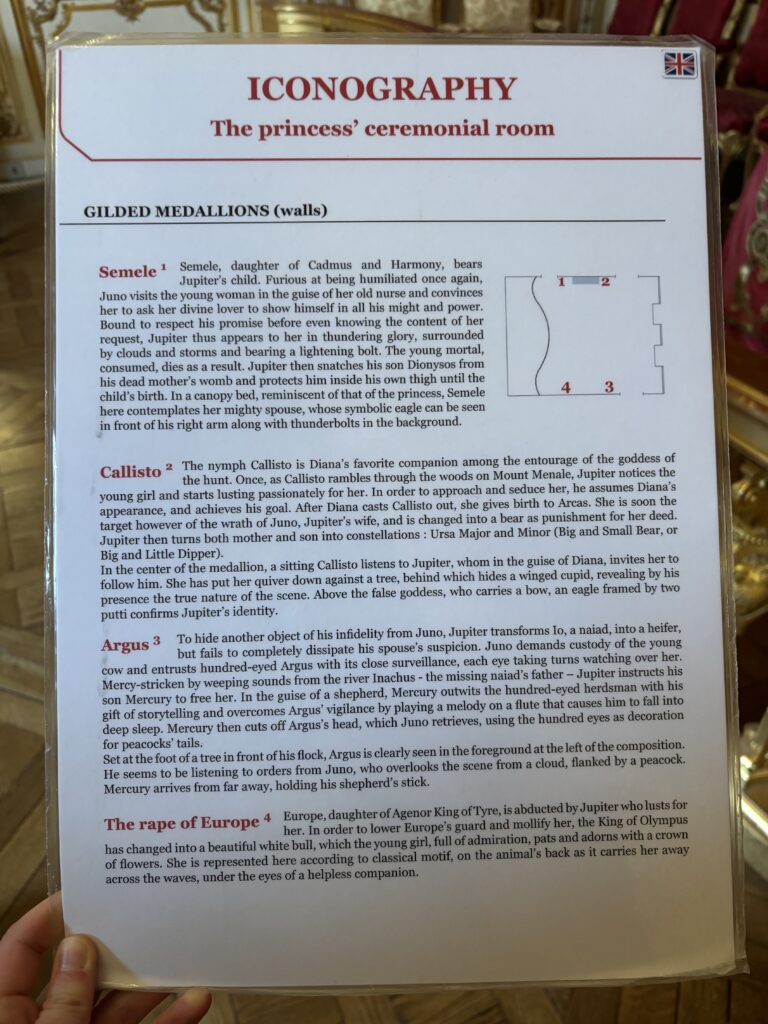
Left: Sample general summary sheet, Right: Sample iconography sheet
These sheets allowed visitors to learn a lot of information about each room. If I had had something like this in Versailles, I would have been able to answer a lot of my questions.
One more comparison before I go. The Soubise family renovated their quarters in the late 18th century and were heavily influenced by Versailles. My favorite detail was that the wooden floors in the two buildings were practically the same!
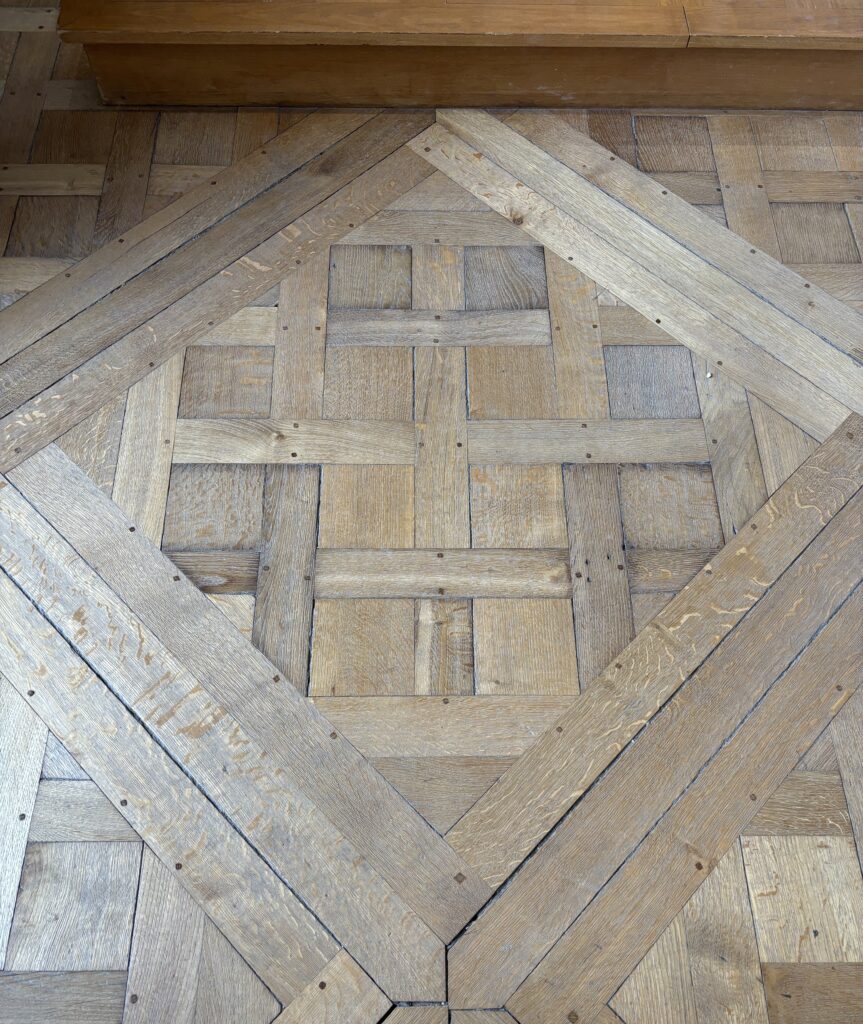
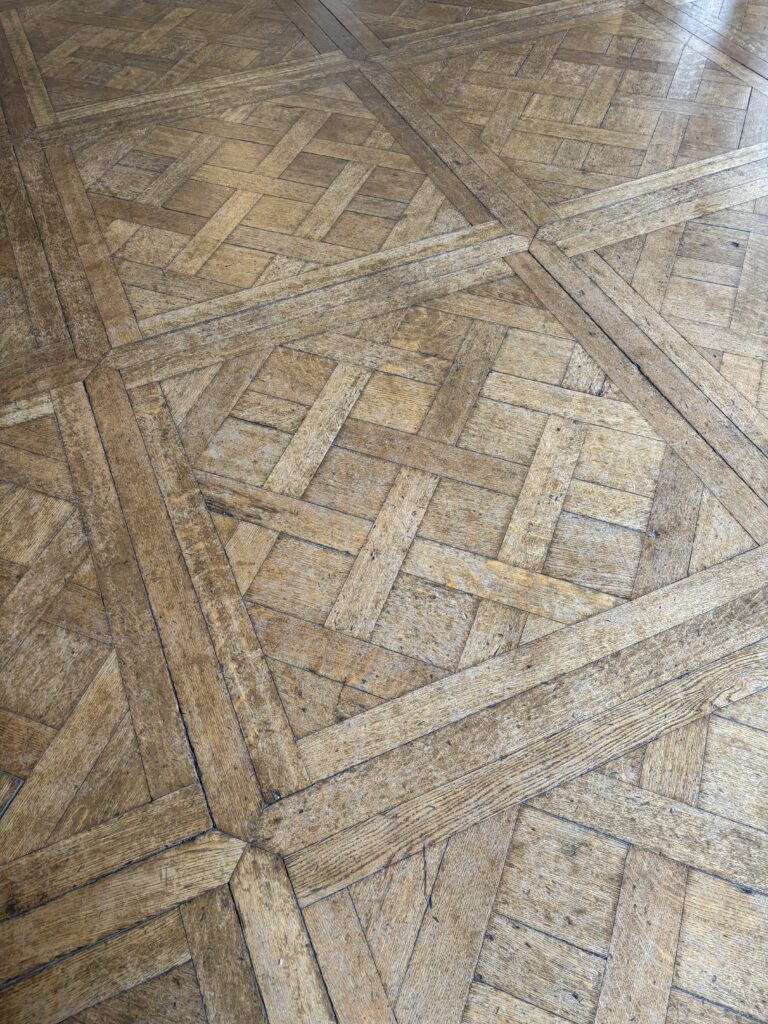
Left: Floor at Versailles, Right: Floor at Musée des Archives Nationales
Au Revior,
Laurie
1 Comment
Wait, I remember seeing laminated sheets like that in the Musée de Cluny, at least in the room with the tapestries of The Lady and The Unicorn! We were in a bit of a rush so I didn’t really get to check them out, but I think I remember them being in English and French too. It seems at least a few other places have realized that’s a good way to give extra information to those who want it!